
Sharleen Mohammed
Zimbabwe’s livestock sector is once again on high alert following a foot-and-mouth disease (FMD) outbreak in Mangwe District, Matabeleland South, with veterinary authorities pointing to buffaloes as the likely source of infection.
According to the Directorate of Veterinary Services, the outbreak was reported on 5 January 2026 at Maholi and Hannavale dip tanks, areas close to the Botswana border. Investigations indicate that buffaloes had been sighted roaming nearby communal grazing areas about two months before the disease was detected.
Foot-and-mouth disease is a highly contagious viral disease that affects cattle, goats, sheep and pigs. It causes sores in the mouth, on the feet and teats, making animals lame and unable to feed properly. While it rarely kills adult animals, it leads to serious production losses and triggers movement bans that hit farmers’ incomes and national beef trade.
Veterinary officials recorded 54 cases out of a cattle population of 2 403, with animals of different age groups showing typical FMD symptoms. Samples have since been collected and sent to a reference laboratory in Botswana to determine the exact virus strain and guide vaccine selection.
The Permanent Secretary in the Ministry of Lands, Agriculture, Fisheries, Water and Rural Development, Professor Obert Jiri, said the outbreak reflects a growing regional challenge, with foot-and-mouth disease also circulating in neighbouring Botswana, Mozambique and South Africa.
He explained that wildlife, particularly buffaloes from conservancies and game parks, remain a major source of infection for communal herds, especially in border districts where livestock and wildlife share grazing and water points.
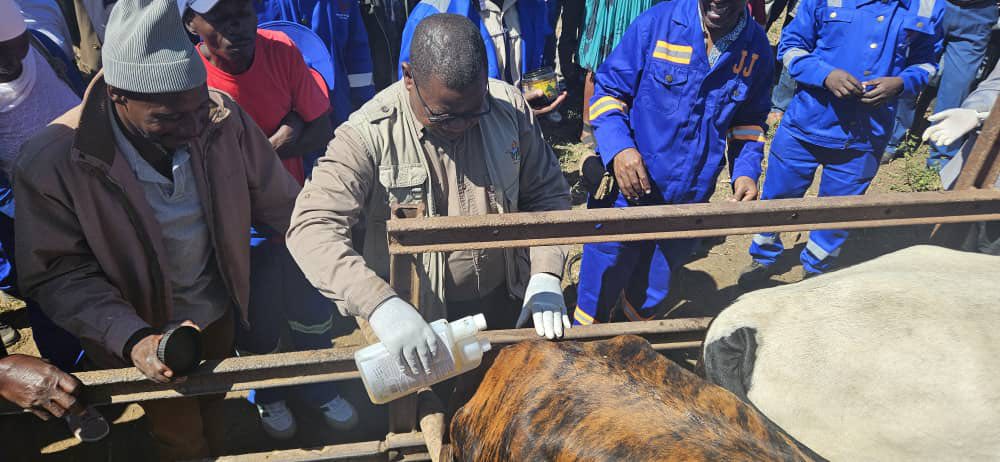
To contain the outbreak, authorities have imposed strict movement controls, banning the movement of cattle and beef products from affected red zones. Vaccination is being rolled out within a 20-kilometre radius, with the aim of turning vaccinated areas into green zones where controlled movement can resume.
Professor Jiri urged farmers to be vigilant, limit cattle movement, report suspected cases immediately and cooperate with veterinary officers and the police enforcing livestock controls.
“This disease affects more than animals. It disrupts markets, limits exports and directly affects rural livelihoods that depend on cattle,” he said, adding that prevention remains cheaper than control.
Veterinary services have also intensified surveillance and awareness campaigns to help farmers understand the signs of FMD and the importance of biosecurity, particularly in areas close to wildlife corridors.
The outbreak highlights the ongoing challenge of balancing wildlife conservation with livestock production, as Zimbabwe pushes to rebuild its beef industry, protect rural incomes and maintain access to regional and international markets.
Authorities say they will continue updating farmers and stakeholders as containment efforts progress.